
An influencer campaign brief should tell a creator what the work needs to achieve, what must be delivered and how the deal will be judged. It should not turn their voice into a brand script. The most useful brief separates non-negotiable facts from creative suggestions and makes the money as clear as the idea.
If you need the document rather than the process, use our free influencer brief template. This article walks through the choices behind it.
Start with one outcome and one audience
“Make us go viral” is not a workable instruction. Choose a concrete communication job: show first-time users how to do something, demonstrate a product in a believable setting, or explain why a particular audience might care. State the audience's situation rather than listing every possible customer.
For software, that might be “show freelance designers how to turn a client call into a task list.” For a physical product, it might be “demonstrate the setup in a small apartment.” Neither statement guarantees sales; it gives the creator a useful creative direction.
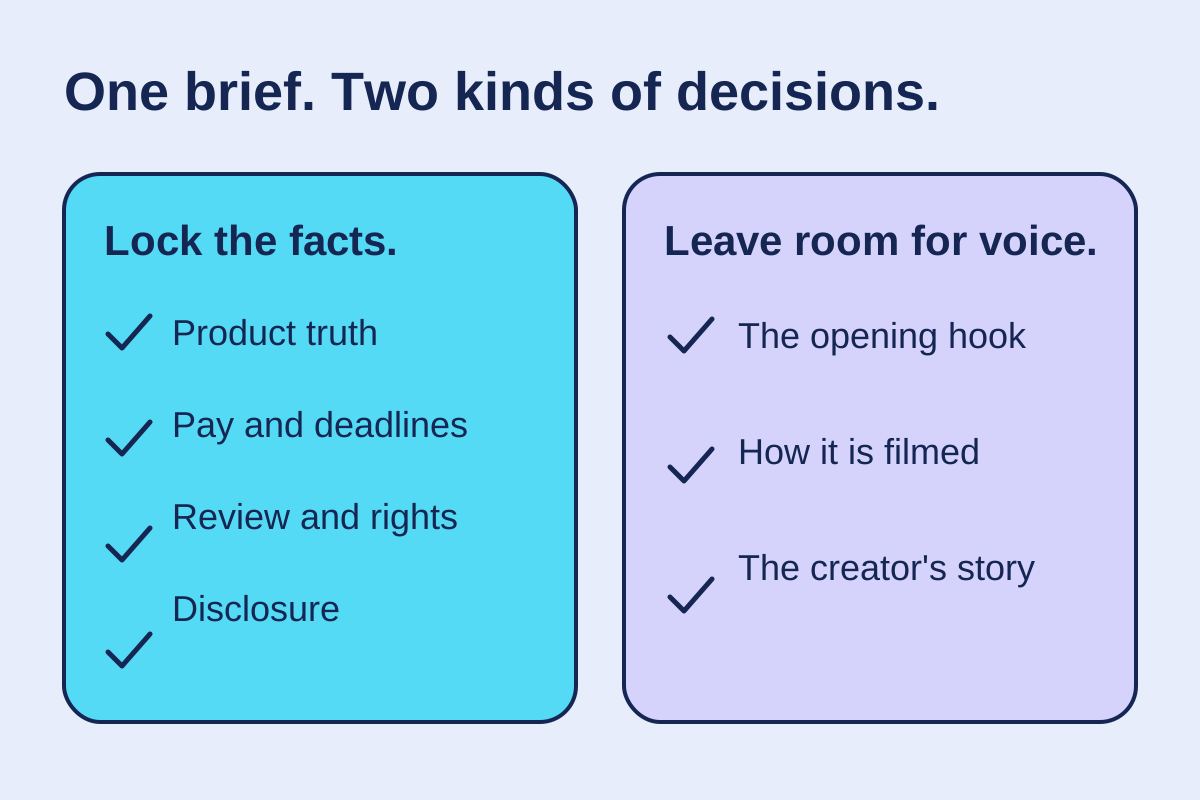
Supply approved product facts, a working demo or sample, and any claims that must not be made. Keep those separate from optional hooks, visual references and suggested phrasing. A creator should be able to propose a different opening without accidentally changing the agreed deliverable.
Put the practical details in the same document
| Decision | What to write down | Ambiguity to avoid |
|---|---|---|
| Deliverable | Platform, format, number of posts and required account | “A video” with no posting obligation |
| Timing | Posting window, time zone and tracking-window start/end | “Next week” or an indefinite measurement period |
| Compensation | Fixed fee, CPM or hybrid; named paying metric; maximum gross earnings | Treating a cap as guaranteed pay |
| Review | Review deadline, permitted revisions and make-good conditions | Unlimited edits after acceptance |
| Additional videos | Whether allowed, who approves, how views combine and whether the cap changes | Assuming a second post doubles the budget |
| Bonus | Trigger, evidence, amount, deadline and total funding limit | A discretionary promise presented as automatic earnings |
| Rights | Intended reuse, duration, channels and any separately agreed paid usage | Assuming a sponsored post includes all advertising rights |
A creative brief is not a substitute for the accepted commercial agreement. Before work starts, both sides need one accepted version covering the relevant terms. If the scope changes, record the change and obtain agreement rather than silently updating a shared document.
A completed software campaign example
The following is a fictional planning example, not a Swayed customer campaign or a rate benchmark.
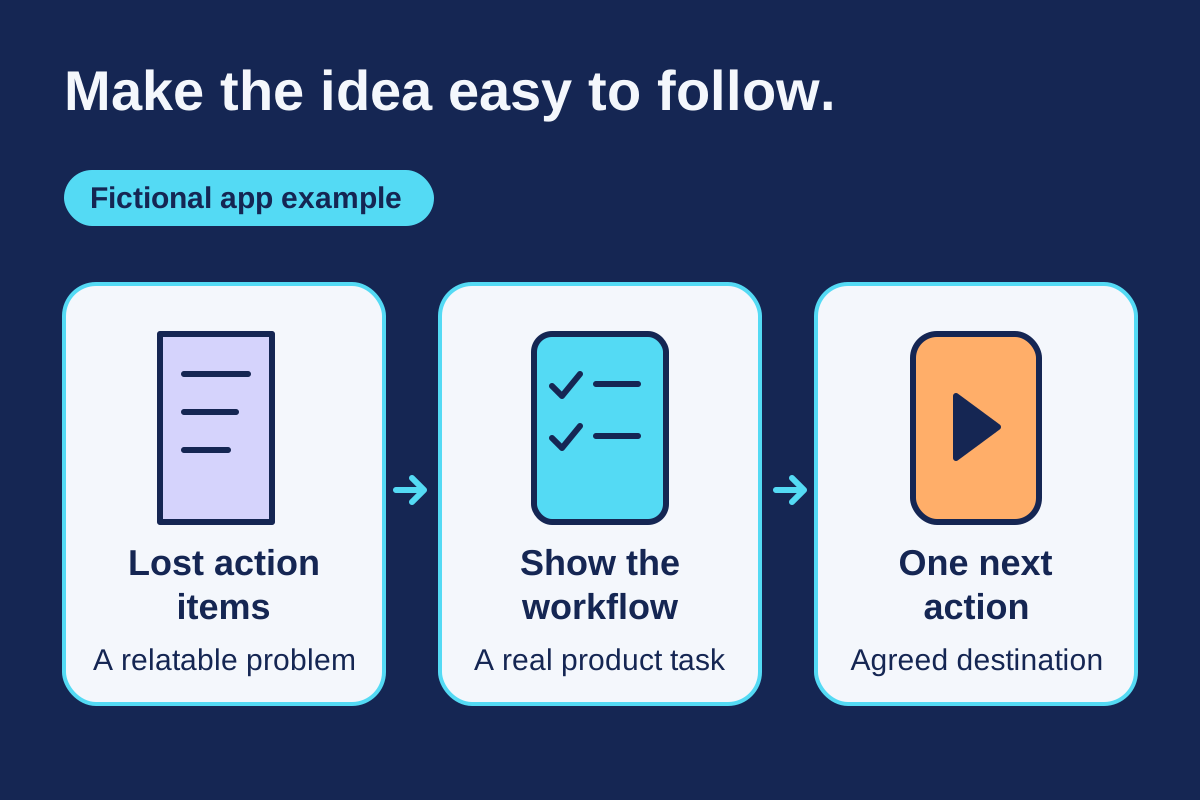
Product and audience: “TaskNest,” a fictional task-list app, for freelance designers who lose action items after client meetings. The creator should demonstrate a real feature using an approved test account; no claims about guaranteed time savings.
Deliverable: One TikTok video on the creator's agreed account, showing a meeting note becoming a task list. Include the agreed product name, approved destination and sponsorship disclosure. The creator chooses the hook and filming style.
Timing: A seven-day posting window agreed in UTC. Eligible views are the platform-reported video views recorded during the 14-day tracking window starting at publication. The order must define how the final snapshot is collected and what happens if the source becomes unavailable.
Payment: $10 per 1,000 eligible views, capped at $1,000 gross creator earnings. At 50,000 eligible views, gross earnings are $500, not $1,000. Use the CPM calculator to test the arithmetic. The cap is a ceiling, not a promise of earnings or reach.
Review and extra work: One factual correction before publication; no requirement to reshoot merely because the brand prefers a new idea. A second video is allowed only with the brand's written agreement. If accepted, eligible views combine under the same $1,000 cap and the order states the second video's tracking deadline. No performance bonus in this example.
Rights and disclosures: No paid advertising reuse unless separately agreed. For US-targeted endorsements, consult the FTC's disclosure guidance: the paid relationship should be clear to the audience. Do not ask for unsupported or dishonest product claims.
Before you send it, test the awkward cases
Ask whether the creator can answer these questions without another message:
- What happens if the post meets the content requirements but earns fewer views than hoped?
- Is the paying metric video views, impressions or something else, and from which source?
- Can a second video count, and who agrees the terms before it is made?
- Which revisions are included, and what is a new deliverable?
- When does tracking stop, and when is the review decision due?
- What can the brand reuse, and what requires a separate agreement?
If a performance threshold changes the payment, explain it before acceptance. If it is only a campaign target, label it as a target rather than a condition for withholding an otherwise earned fixed fee. Our performance-based campaign guide shows the difference.
Where this fits in Swayed
We are building versioned Campaign Orders so the accepted brief, compensation and review rules stay together. Swayed is currently on the waitlist; this is the planned workflow, not an invitation to start a live campaign today. You can use the template with your existing process now.
Swayed Media is currently on the waitlist. Product workflows described here are planned; this guide and its tools are available now.