
Views, reach and impressions answer different questions. Views describe a platform-defined viewing event, reach describes unique accounts or people according to the source, and impressions describe displays. The same person can generate more than one viewing event or impression. None of these, by itself, establishes a purchase or a return on investment.
The practical rule is simple: preserve the metric's native name, source and observation time. Do not rename every exposure number “views” to make a report look consistent.
What each metric tells you
| Metric | Useful question | Important limitation |
|---|---|---|
| Video views | How many qualifying viewing events did the platform report? | A platform's rules determine what counts; it is not automatically unique viewers or completed watches. |
| Reach | How many unique accounts or people saw the content according to this source? | It may be estimated and is not necessarily deduplicated across posts or platforms. |
| Impressions | How many times was the content displayed under this source's definition? | Repeat displays can count. Display does not prove attention or purchase. |
| Engagements | What actions did people take: likes, comments, shares, saves or clicks? | Specify the included actions and denominator before comparing rates. |
| Attributed conversions | Which completed actions were connected to a defined tracking method? | Attribution is not the same as proving the campaign caused incremental sales. |
Native platforms change their metric definitions and available fields. TikTok's Video Object reference describes view_count as the video's view count and exposes likes, comments and shares separately. That is not a unique-audience field. Check the current source, account eligibility and permissions before promising that any particular metric will be available.
A numerical example without inflated totals
Imagine one post reports 12,000 impressions and 8,000 accounts reached from the same source and reporting window. Those are not 20,000 people. The figures suggest 1.5 displays per reached account on average, subject to the source's estimation and counting rules.
Now imagine two posts each report 8,000 accounts reached. Adding them yields 16,000 post-level reach counts, not necessarily 16,000 distinct accounts across the campaign. Some accounts may have seen both. Label a summed report “sum of post-level reach” unless the platform provides a genuine campaign-level deduplicated figure.
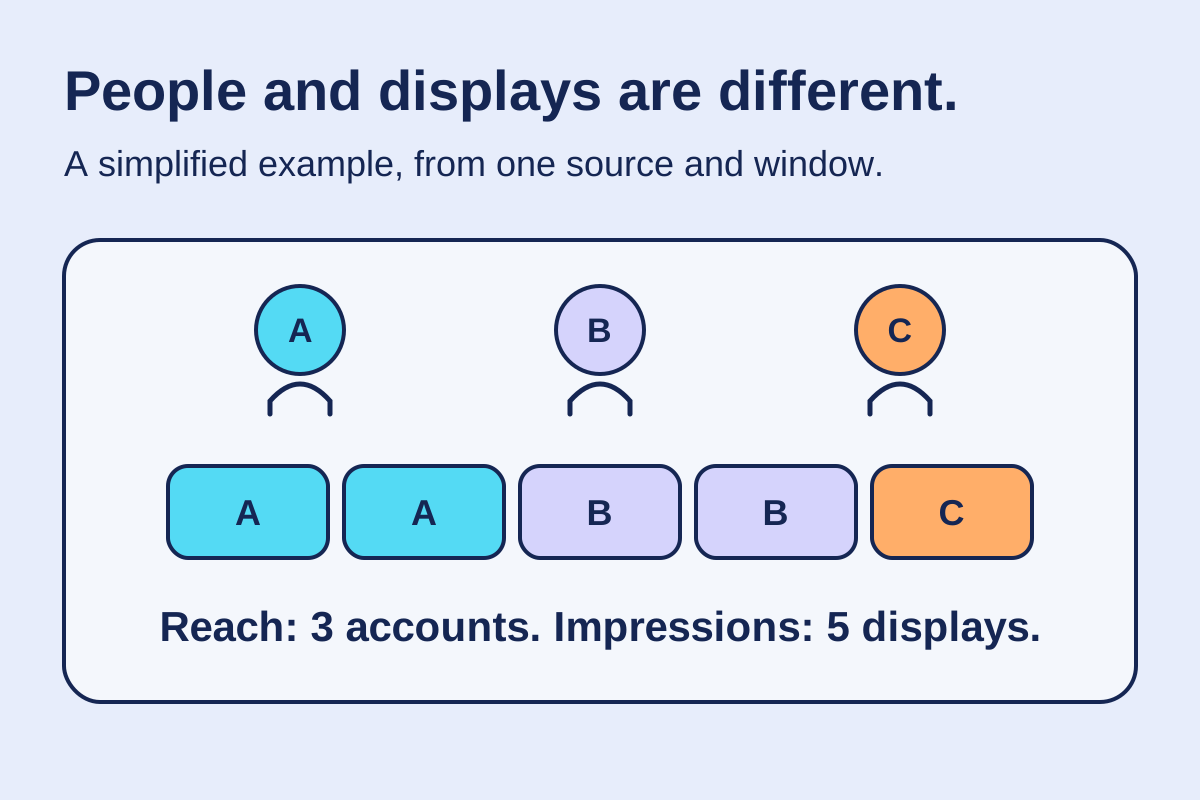
Video views from another platform do not become additional unique people either. A cross-platform total can be a useful tally of named events, but only if the report says what was added. Keep the underlying figures visible.
Agree the paying metric before the campaign
A deal at $10 per 1,000 eligible video views uses video views—not impressions and not reach. At 50,000 eligible views, that formula produces $500 gross creator earnings before any cap or fee. A $1,000 hard cap limits earnings to $1,000 even if the view count goes higher.
Record all of the following in the accepted terms:
- The platform, account and eligible post URLs.
- The exact metric name and permitted evidence source.
- The posting and tracking windows, including time zone.
- How multiple approved posts combine, if additional videos are permitted.
- The rounding rule, cap and any separate fixed fee or bonus.
- What happens when a source is delayed, unavailable or disputed.
Our CPM calculator separates generic advertising CPM from capped creator earnings. It cannot decide whether a post or a view is eligible; the accepted order and review process determine that.
Do not let a snapshot pretend to be a final result
“50,000 views” is incomplete evidence if the report does not say when the count was observed. A number captured on day two and one captured after a 14-day tracking window are not comparable final outcomes.
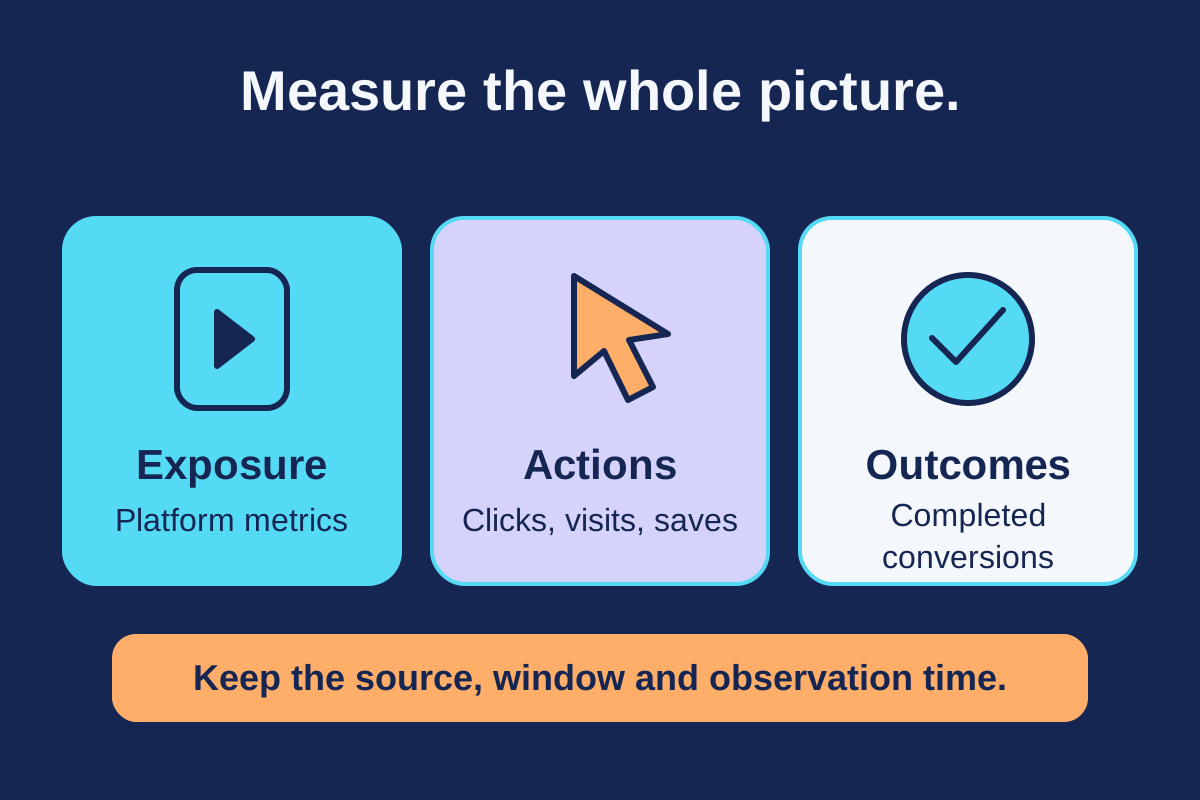
A report should include the post URL, publication time, observed-at time, metric label, source, window and whether the row is provisional or final. If access fails, mark it unavailable; do not silently replace a missing native metric with a differently defined estimate. Use our reporting template to keep that context with the numbers.
Exposure is not sales ROI
Cost per 1,000 exposures is a cost-efficiency calculation. It is not sales ROI. A campaign may create awareness or useful creative assets without producing reliably attributed transactions.
If you report revenue, name the tracking method, conversion window and relevant costs. A discount code, tracked link or analytics attribution model each answers a different question. Say “attributed revenue” where appropriate, acknowledge missing coverage, and do not claim that every attributed transaction is incremental.
The planned Swayed approach
Swayed's planned post-review workflow keeps the submitted post, accepted brief and source-labelled metrics together. We are not offering live tracking from this waitlist site, and platform data availability will depend on supported integrations and account access. The principle still applies to a spreadsheet today: keep the source and the context, not just the largest number.
Swayed Media is currently on the waitlist. Product workflows described here are planned; this guide and its tools are available now.