
TikTok influencer marketing means working with creators to introduce a product, service or idea through TikTok content. For a first campaign, the useful question is not “Who can make us go viral?” It is “Who can demonstrate this product to the right people, under terms we can afford and results we can evaluate?”
This guide gives you a practical way to answer that question: choose the campaign format, build a creator shortlist, agree the work and payment, then track what happened. It includes an illustrative software campaign and a launch checklist you can use without buying a marketing platform.
Start here: write down one audience, one product problem, one intended action and one maximum budget. Then use our free campaign brief template to turn those four decisions into an offer a creator can assess.
1. Choose the kind of TikTok campaign you actually need
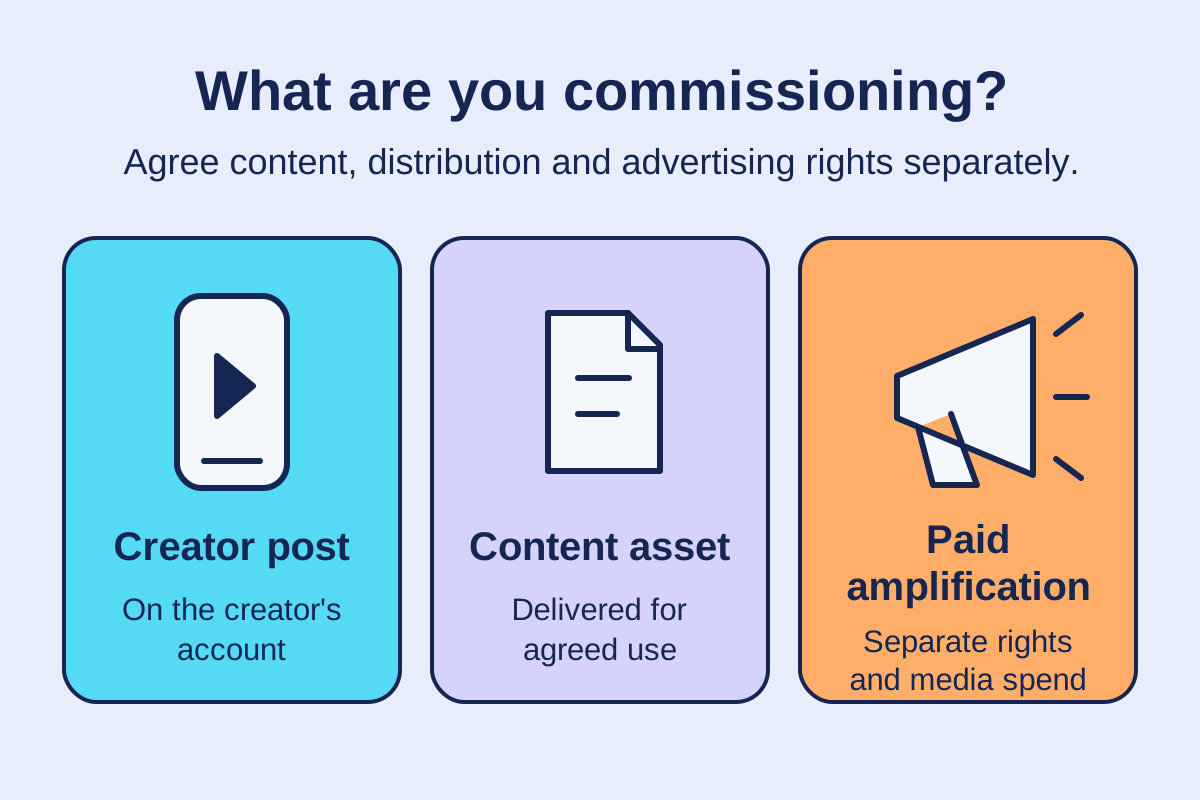
Not every creator video buys the same thing. Decide where the content will appear and whether you want audience distribution, a reusable creative asset or paid advertising.
| Format | What you are commissioning | What to settle before the offer |
|---|---|---|
| Sponsored creator post | A video published on the creator's agreed account | Posting window, required content, disclosure, measurement period and how long the post stays live |
| Creator-made asset | A video delivered for the brand's own use, without necessarily appearing on the creator's account | Files, editing, permitted channels and usage duration; do not assume their audience is included |
| Creator post plus paid amplification | A creator post with separately agreed advertising use | Authorization, ad-use period, advertising budget, editing permissions and reporting boundaries |
TikTok's current TikTok One collaboration guidance describes creator invitations and projects, including requesting authorization to sync posts to Ads Manager. Check the options available in your market and account before promising a particular workflow. TikTok One and Swayed are separate services; this guide does not imply an integration or partnership.
Keep organic distribution and paid amplification separate in your plan. A sponsored post fee does not automatically buy unlimited advertising rights. Our UGC vs influencer marketing guide explains the distinction between buying content and buying a sponsored post's distribution.
2. Set an outcome you can observe
Choose an action that fits how people buy your product. A software demonstration might aim for qualified trial starts; a physical product might aim for product-page visits and attributable orders. An awareness campaign may instead focus on relevant exposure and the questions viewers ask.
Write the measurement plan before contacting creators:
- Primary result: the one action that will guide your next campaign decision.
- Supporting signals: native video views, saves, comments or visits, kept under their own names.
- Source: which platform report, analytics event or order record supplies each number.
- Window: when measurement starts and ends, with an agreed time zone.
- Limitation: what the method cannot observe, such as visits without a tracking link or purchases on another device.
Test your own landing page and signup or checkout flow first. If a link reaches the wrong page, the form cannot save a lead, or analytics counts every button click as a conversion, a creator campaign will amplify that problem.
Keep personal information out of campaign tracking URLs. Use neutral campaign labels and a creator reference rather than customer emails, names or private account identifiers.
3. Find TikTok creators by audience fit, not follower count alone
Start with the problem your customer searches for: “small apartment desk setup,” “freelance design workflow” or “meal prep for night shifts” is more useful than a broad search for “influencers.” Look for creators already explaining related situations convincingly.
TikTok One is one possible discovery route where available; direct TikTok research and a creator's stated business-contact channel are others. Do not assume every creator is eligible for a platform program or accepts sponsorships.
For each candidate, examine several recent relevant posts, including sponsored examples where available. Record:
| Signal | What to examine | What not to conclude |
|---|---|---|
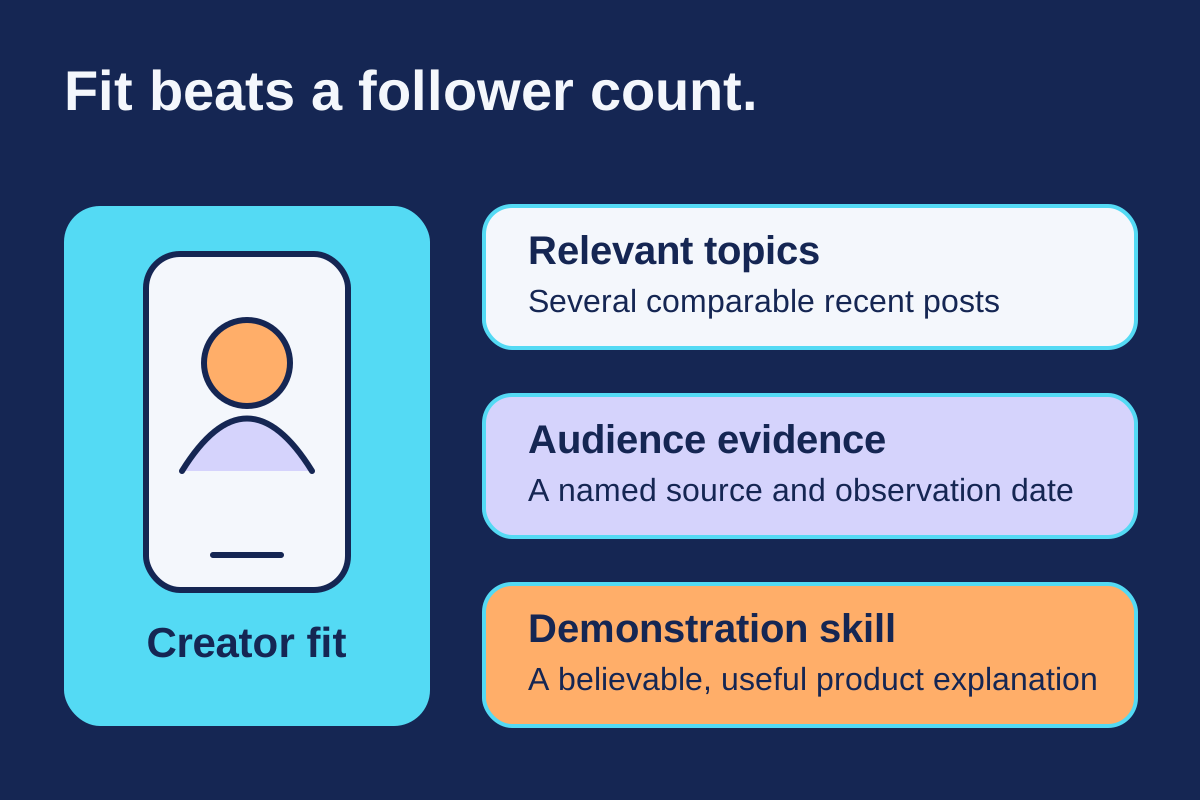
| Topic fit | Does the creator regularly explain a problem your product addresses? | A single relevant viral post proves a lasting audience fit |
| Demonstration skill | Can viewers understand the product's use without a long sales script? | Good production alone proves conversion potential |
| Audience evidence | Available geography/language information and relevant viewer questions | Comments establish precise audience demographics |
| Typical performance | The range across a consistent sample of comparable recent posts | Their highest-viewed video predicts your result |
| Commercial fit | Disclosure, honest claims, previous work and realistic availability | A polished media kit guarantees reliable delivery |
Ask the creator for relevant first-party evidence they are comfortable sharing. Note the source and date; missing audience data is missing, not zero. A median view count across your chosen sample can help describe that sample, but it is not a reach guarantee.
Build a small shortlist you can actually review. For a first test, three complementary creator concepts can be more instructive than many nearly identical posts. That is a planning suggestion, not a universally optimal campaign size. Our micro-influencer guide goes deeper into fit and bounded testing.
4. Budget for the work, rights and distribution separately
There is no honest universal TikTok sponsorship price based only on followers. Request an itemized quote covering creation, account publication, revisions, any product or demo access, exclusivity and reuse. Compare like-for-like scopes, not just the headline number.
Choose compensation that both sides understand:
- Fixed fee: pay for accepted work under the agreed conditions. Lower-than-hoped views do not, by themselves, cancel an earned fixed fee.
- Performance-based fee: define the paying metric, rate, eligible window and maximum gross earnings. A cap is a ceiling, not promised pay.
- Hybrid: specify the fixed component and the performance component separately, including which conditions apply to each.
Use the campaign cost guide to budget beyond creator pay. If you use CPM, our CPM calculator distinguishes impression-based advertising arithmetic from capped creator earnings based on eligible views. Do not silently substitute reach, impressions and views.
If a bonus or additional video is possible, define it before acceptance: who approves it, the trigger, evidence, deadline, how performance combines, and whether the cap changes. “We may pay more if this goes well” is not an automatic bonus. See performance-based campaign terms for worked examples.
Swayed is currently a waitlist product. Its planned model charges brands 5% on top of creator spend and creators 10% of approved gross earnings. Unused funded budget and its matching brand-fee portion stay in the brand's balance for future campaigns, rather than being routinely refunded in cash; support handles permitted exceptions. These are Swayed's planned terms, not the rules of TikTok or direct creator contracts. See brand pricing and how creator payments will work.
5. Write a TikTok brief that leaves room for the creator
A useful brief specifies product truth and commercial requirements while letting the creator choose the delivery. Supply a working product, sample or demo account; approved claims; an intended audience; and one clear call to action. Avoid handing over a script full of claims the creator cannot substantiate.
Offer a creative direction rather than a rigid advertisement. For a task-list app, that could be “show one moment when an action item gets lost, then demonstrate how you capture it.” The creator can decide whether that works as a screen recording, a desk-side demonstration or a before-and-after story.
Agree these details in writing:
- Account, format, number of deliverables and posting window.
- Product facts, required disclosures and any prohibited claims.
- Destination and whether the agreed account/format supports that link placement.
- Review deadline, permitted revisions and who approves publication.
- Pay formula, earned-fee conditions, cap, bonuses and extra-video rules.
- Measurement source, observation dates and handling of unavailable metrics.
- Reuse, editing, advertising authorization, exclusivity and post-live duration.
Use the brief template, then read how to write a creator brief for a completed example. Make changes through a new agreed version rather than changing the requirements after acceptance.
6. Check disclosure, music and advertising permissions before posting
TikTok requires its commercial content disclosure setting for content promoting a brand, product or service. Do not ask a creator to hide a sponsorship to make the video appear organic.
For endorsements reaching US consumers, the FTC's disclosure guidance explains that material brand relationships must be clear to the audience. A video needs an understandable disclosure within the video, not only a buried caption; a platform label is not necessarily enough by itself. This is a planning reminder, not a legal review of your campaign.
Treat audio clearance as part of production. TikTok's Commercial Music Library guidance describes music available for commercial TikTok content. Check the permitted use of the actual track and asset. Do not assume a trending sound is cleared for sponsorship, paid ads or reuse outside TikTok.
For paid amplification, agree the scope and duration and use TikTok's supported authorization process. Never ask a creator for their account password. Keep media spend and paid results separate from the original creator fee and organic results.
7. A worked first-campaign example
“TaskNest” below is a fictional software product. The budget and results are illustrative, not Swayed customer outcomes, market-rate benchmarks or predictions.
Audience and problem: freelance designers losing action items after client calls. Desired action: start a trial after seeing a real demonstration of the task-capture workflow.
The brand commissions three TikTok creator posts for agreed fixed fees of $300, $350 and $350: $1,000 total creator pay. Each creator demonstrates the same product task but chooses a different context: meeting notes, project handoff or weekly planning. The scope includes one factual revision, an agreed posting window and a 14-day reporting period. Paid advertising reuse is excluded unless separately agreed; taxes, platform fees and other costs must be budgeted separately.
Before posting, the brand tests the destination, signup storage and completed-signup event. Where supported by the agreed placement, it uses distinct non-personal campaign links; otherwise it records the agreed measurement limitation rather than inventing click tracking.
Suppose the reporting window produces 58,000 summed native video views, 420 attributed visits and 21 completed trials. The report would show:
- Creator-fee cost per attributed trial: $1,000 ÷ 21 = approximately $47.62. This excludes other campaign costs and says nothing yet about trial quality or paid-customer acquisition cost.
- Attributed visit-to-trial rate: 21 ÷ 420 = 5%, using the same reporting scope.
- Exposure: 58,000 viewing events, not 58,000 unique people and not proof of incremental sales.
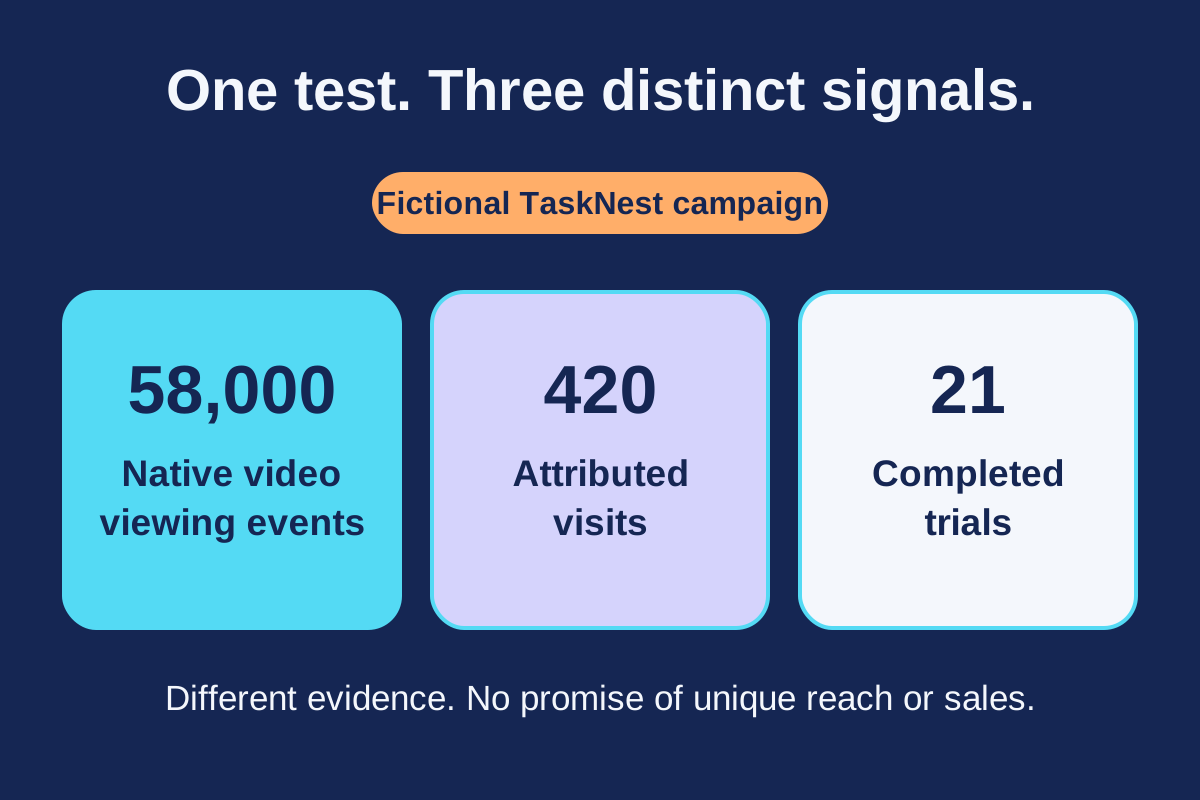
The brand still pays the accepted fixed fees when their earning conditions are met. It reviews which concept attracted qualified trials and what happened after signup before repeating or amplifying the work. A video with fewer views but stronger qualified actions may be more useful than the most-viewed post.
8. Report what happened, then decide what to repeat
Use the campaign reporting template to record every post URL, source, observation time, agreed compensation and decision. Separate organic and paid results and use the same observation rules across creators.
Views, reach and impressions are not interchangeable. Our measurement guide explains how to avoid counting repeated viewing events as unique people. Neither a tracking link nor a promo code proves the campaign caused an incremental sale; report attribution honestly.
For the next test, change one major variable where practical: creator niche, creative concept, offer or destination. Keep notes on viewer questions and creator feedback as well as the numbers. If the product demonstration was clear but the landing page confused people, the next improvement may belong on your site rather than in another creator brief.
First TikTok campaign checklist
- One audience problem and one primary outcome are written down.
- Each shortlisted creator has relevant content and source-labelled evidence.
- The scope distinguishes account publication, asset delivery and ad use.
- Fees, caps, revisions, bonuses and additional-video rules are accepted.
- Product access, claims, disclosure and music permissions are ready.
- The destination works and real completed actions are measured.
- Posting and measurement windows include time zones and evidence sources.
- Reporting separates native views, attributed actions and paid amplification.
Frequently asked questions
Do I need a large TikTok influencer for my first campaign?
No specific follower count makes a creator the right choice. Start with relevant content, audience evidence, a credible product demonstration and an affordable agreed scope. Smaller creators can be suitable, but neither their size nor engagement guarantees results.
Is TikTok influencer marketing the same as TikTok Shop affiliate marketing?
No. A sponsored creator campaign can promote software, services or products without being a TikTok Shop affiliate deal. Affiliate commissions and Shop workflows have their own eligibility and terms. Do not describe every paid creator video as an affiliate campaign.
Can I pay creators only when they reach a view goal?
Only under performance terms they accept in advance. Define what earns payment, the eligible native metric, rate, cap and observation window. Do not introduce a view threshold after agreeing a fixed-fee post.
Can I turn a sponsored video into an ad?
Only with the necessary agreed rights and platform authorization. Specify the permitted duration, channels and editing scope, and verify the content and audio can be used for that purpose. Publication alone is not permission for unlimited reuse.
Can I run this campaign on Swayed today?
Not yet. These guides, templates and calculator are available now; the campaign product is being built. Join the brand waitlist for launch updates, or see the planned campaign workflow.
Swayed Media is currently on the waitlist. Product workflows described here are planned; this guide and its tools are available now.